CC App (Query & Citations)
Overview
I led the design of the CommandCentral App from its ideation to launch. The aim of this product is to assist first responders in managing CAD (computer aided dispatch) incidents, perform record queries, and issue citations. With seamless workflow integration and intuitive design, it helps the officer spend less time on paperwork and more time in the field, keeping their communities safe.

Problem
Currently officers spend around 25% of their time filling out paperwork. Several agencies still rely on paper based reporting of incidents that are then manually digitized and submitted to their records system. The report writing process can be cumbersome and time consuming which leads officers to take shortcuts with their report writing. These shortcuts cause issues throughout the entire organization once that information gets accessed. Comprehensive and accurate information captured by patrol officers at the edge is critical to overall department efficiency.
Approach
While working alongside a UX researcher, I took several trips out to agencies to speak with and observe the workflows of officers out in the field. We conducted interviews, surveys, contextual inquiries and went out on ride alongs. We gathered feedback and shared it with our product and development teams that are based in the UK. From there, my researcher, co-designer and myself created personas, journey maps, and information architecture maps which led to our wireframe designs.
Research Findings
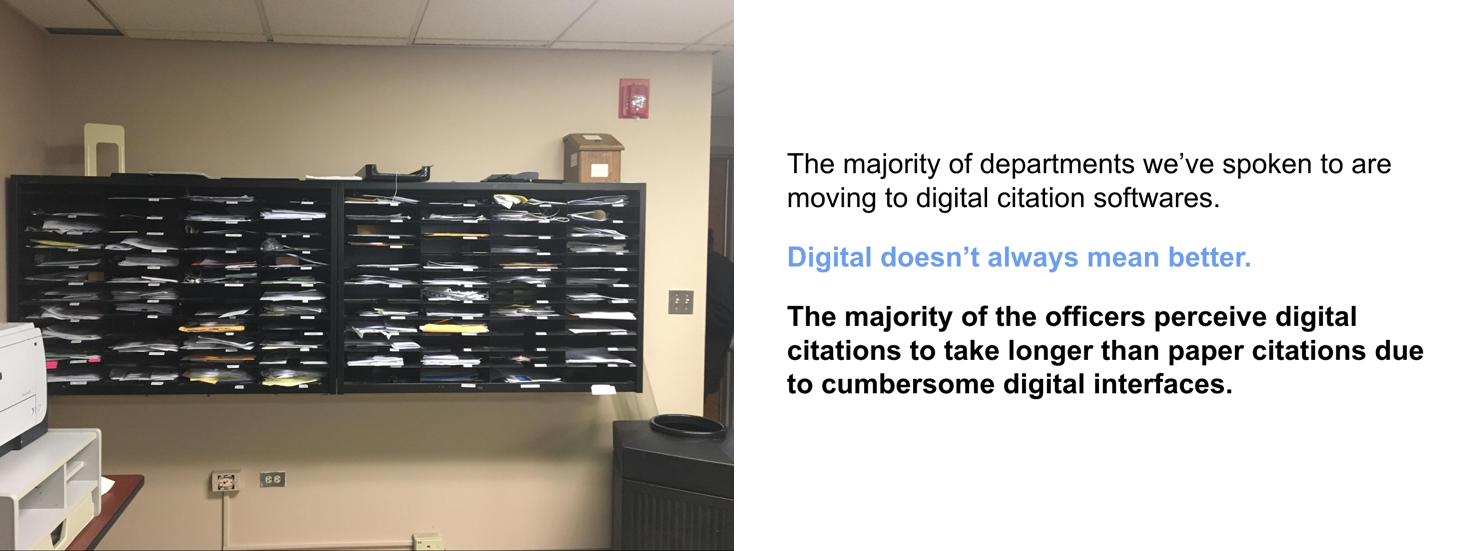
The agency with the most amount of paper forms had a total of 4,000 unique forms that officers, depending on the circumstances may need to fill out related to an incident
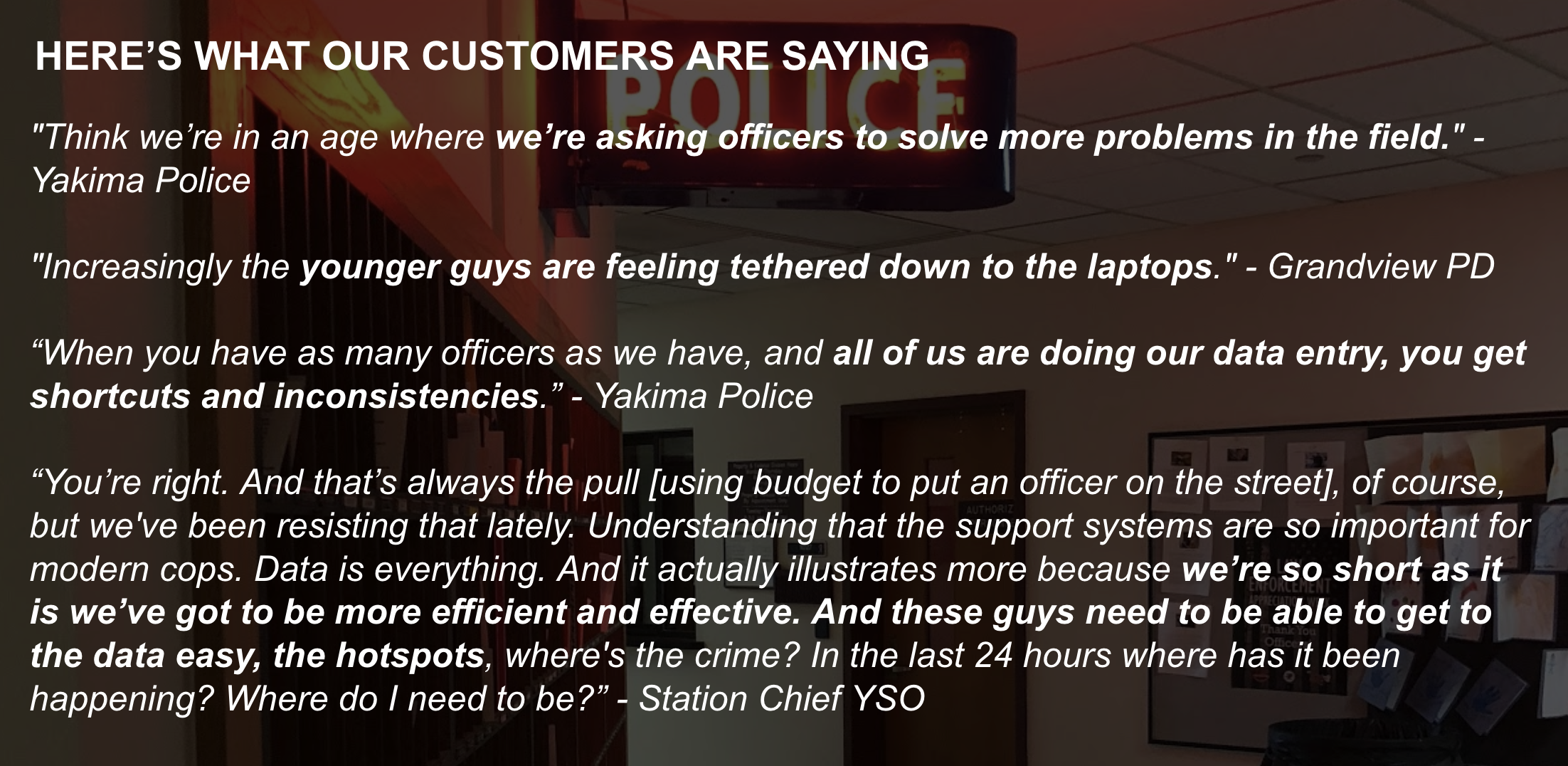
Defining the MVP
Through close collaboration with the product management, research, and lead developers for iOS and Android, we were able to define the features that were required for at launch, including: querying agency, state and federal databases and a digital citation that would automatically be submitted into the agency’s record management system.
Process Work
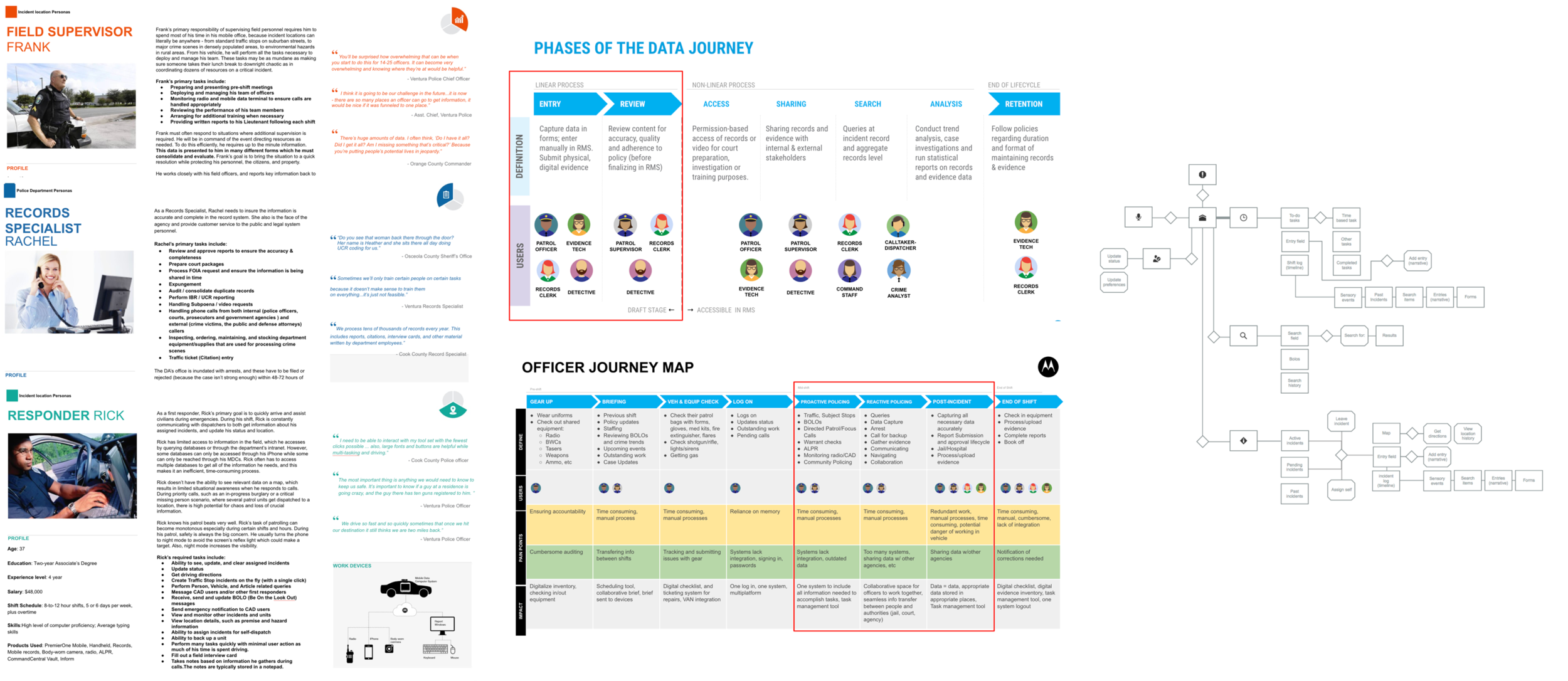
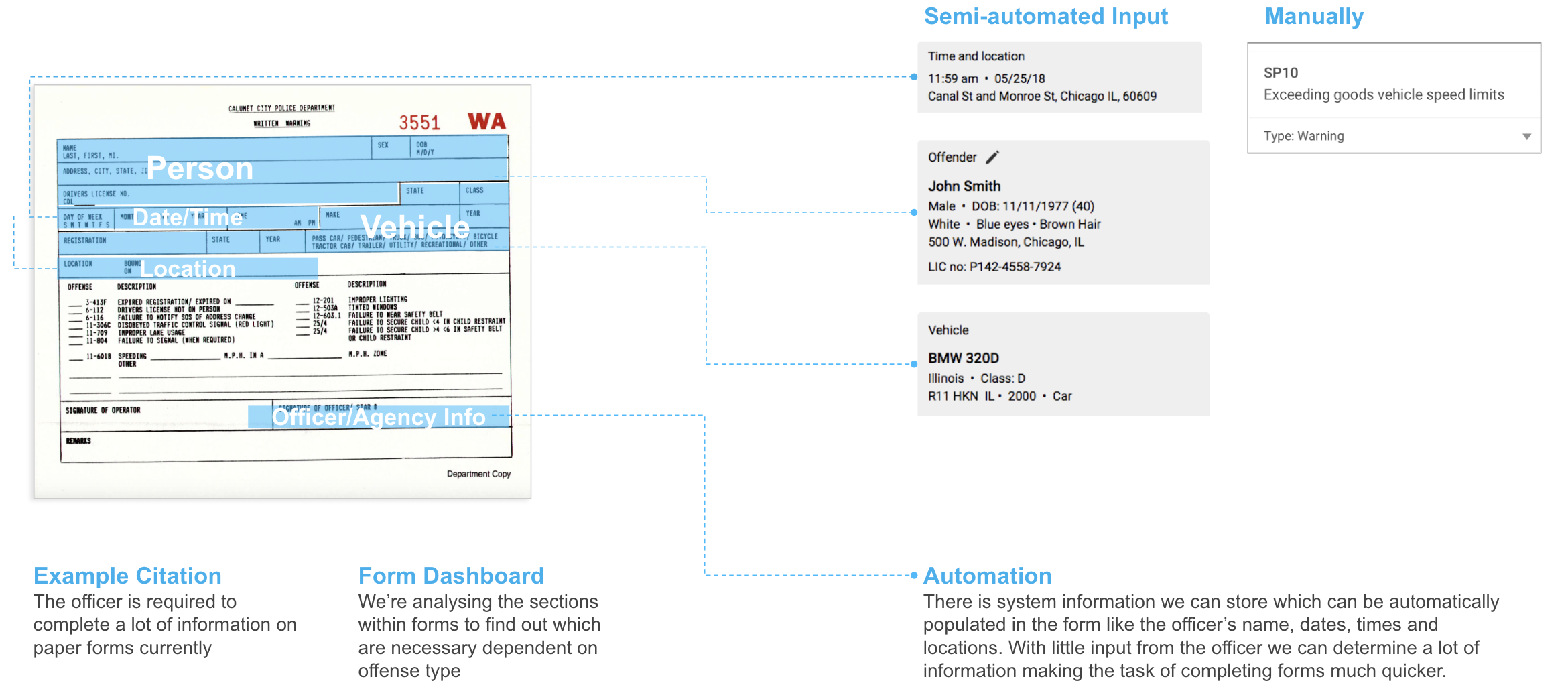
Analyze Paper Citation Variations
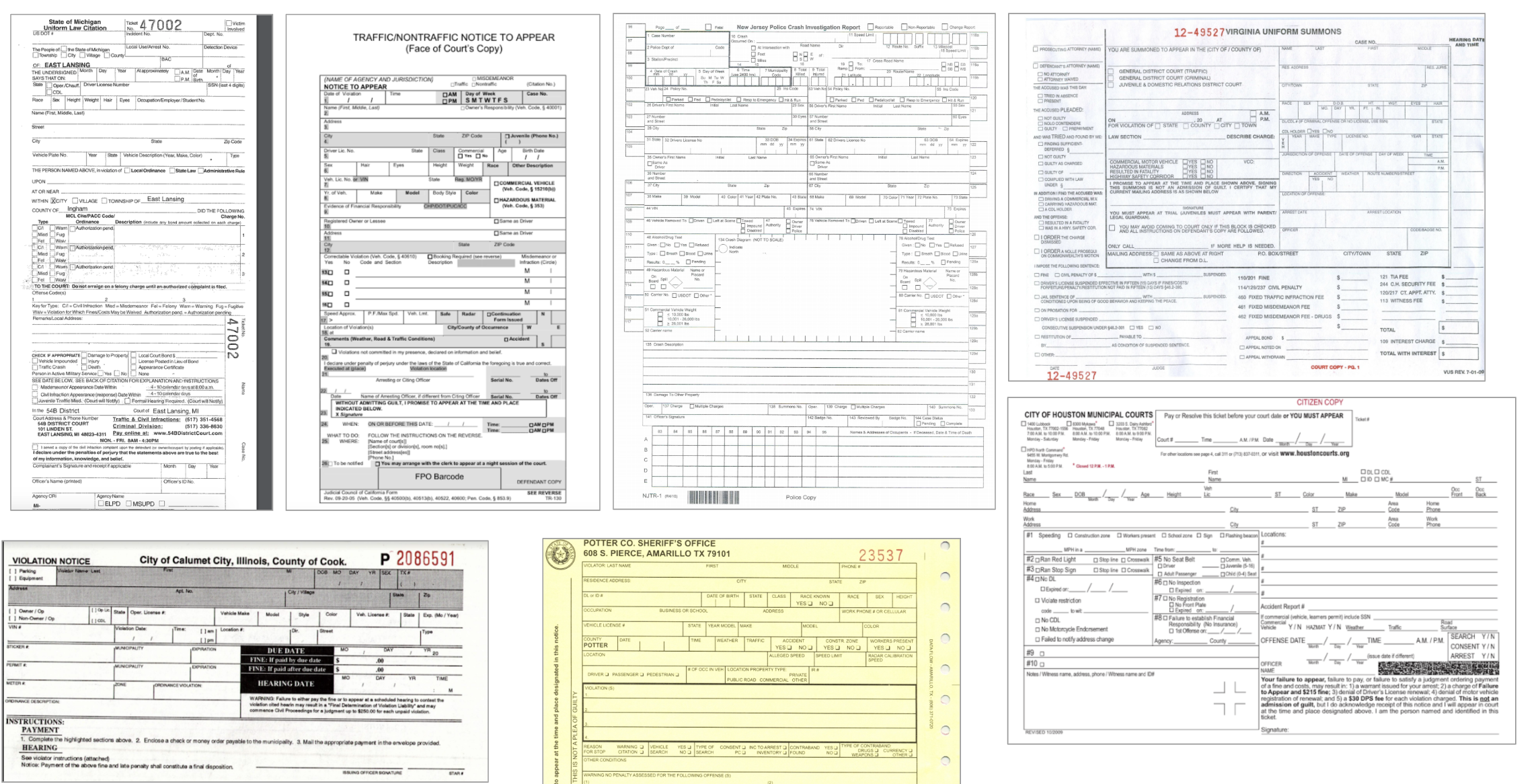
Extract Potential Auto-Populated Fields
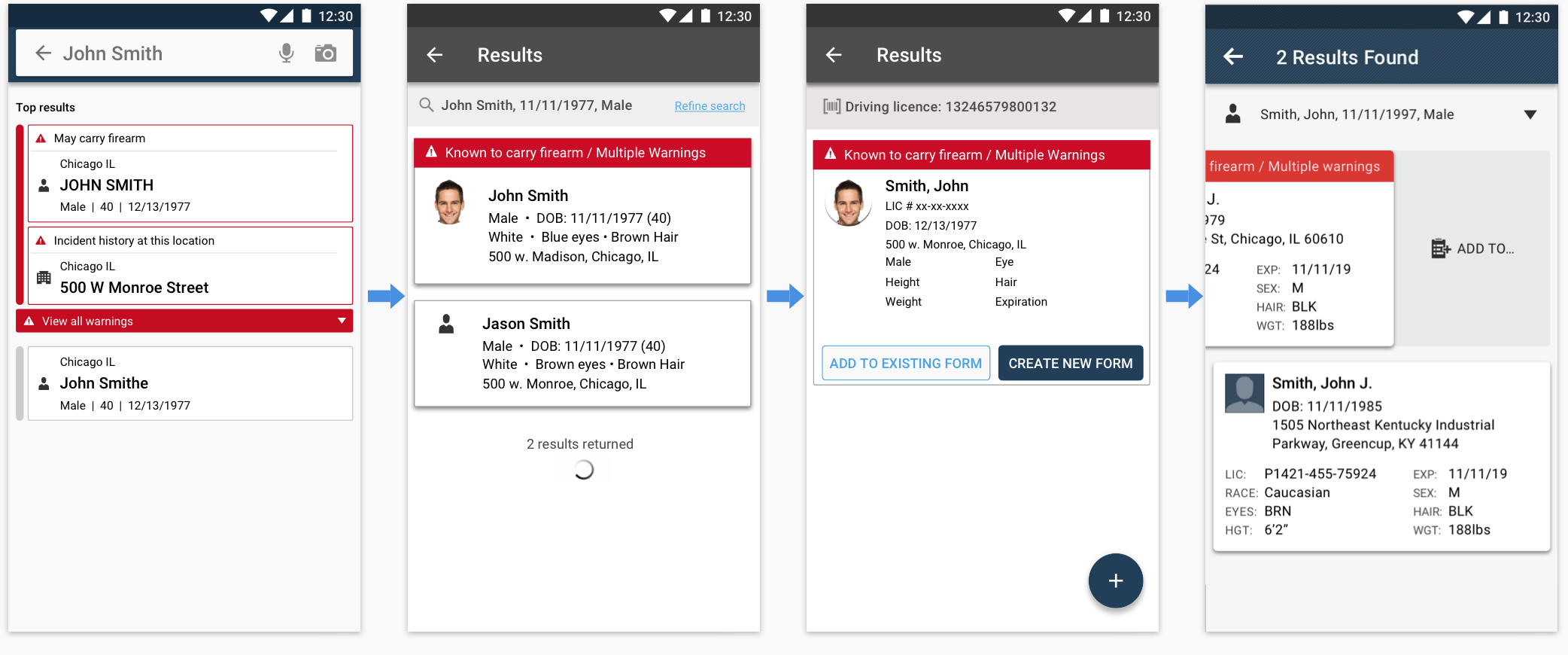
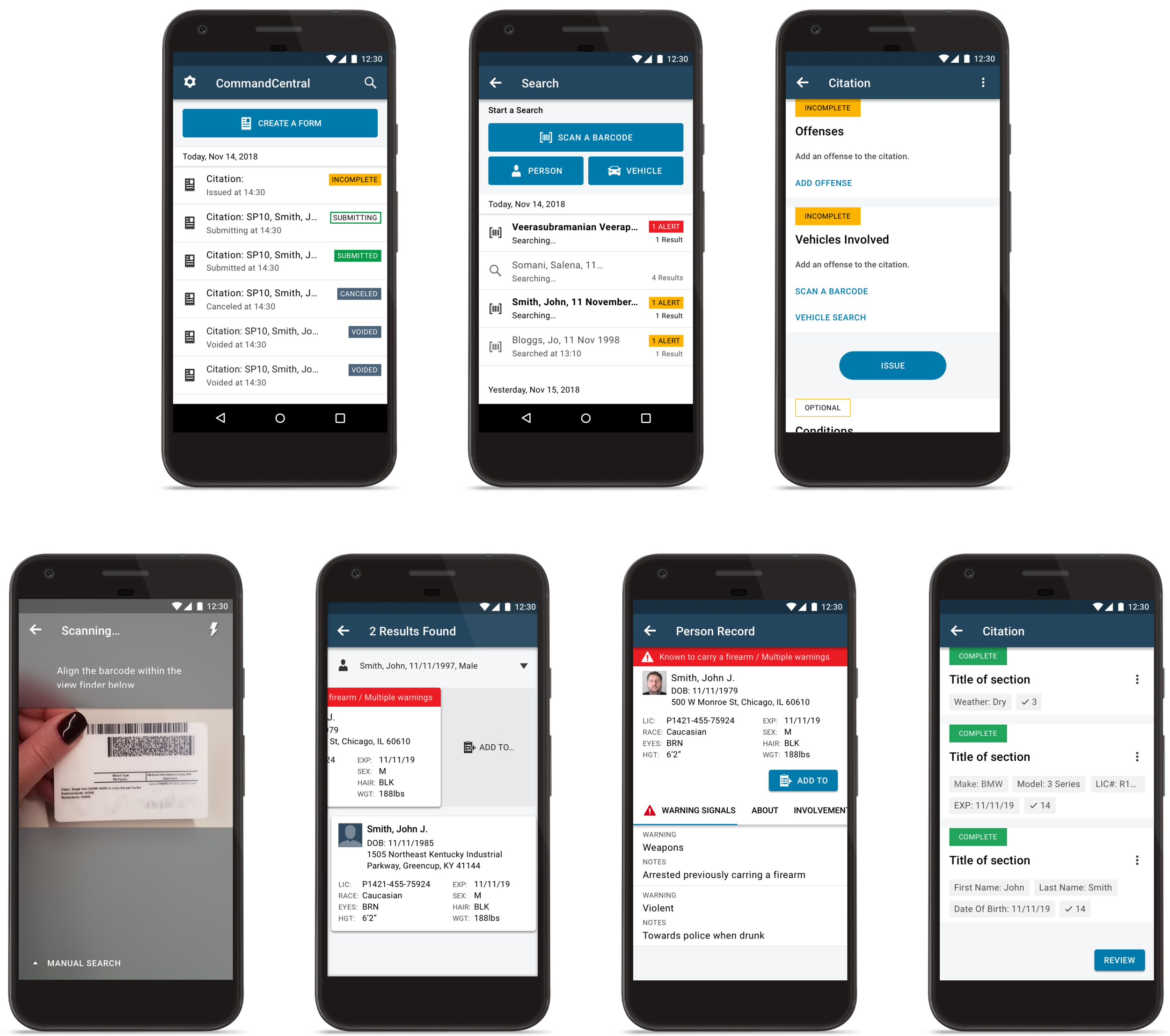
Design Evolution
Explorations that didn’t make the cut
Free form search
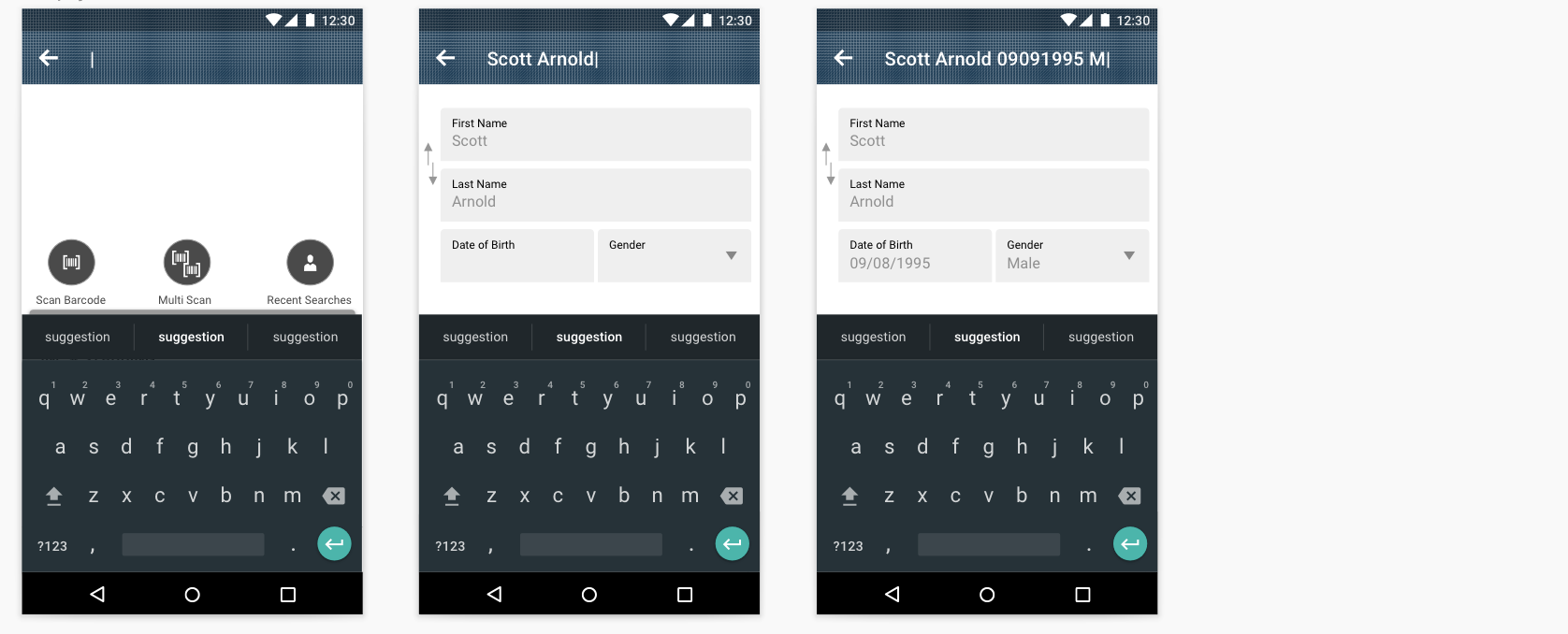
When designing the search experience, the most seamless experience would be to allow for a free form search. However, development effort for such an experience would be too costly for MVP. We therefore agreed upon a structured input search for a person or vehicle.
Virtual assistant search
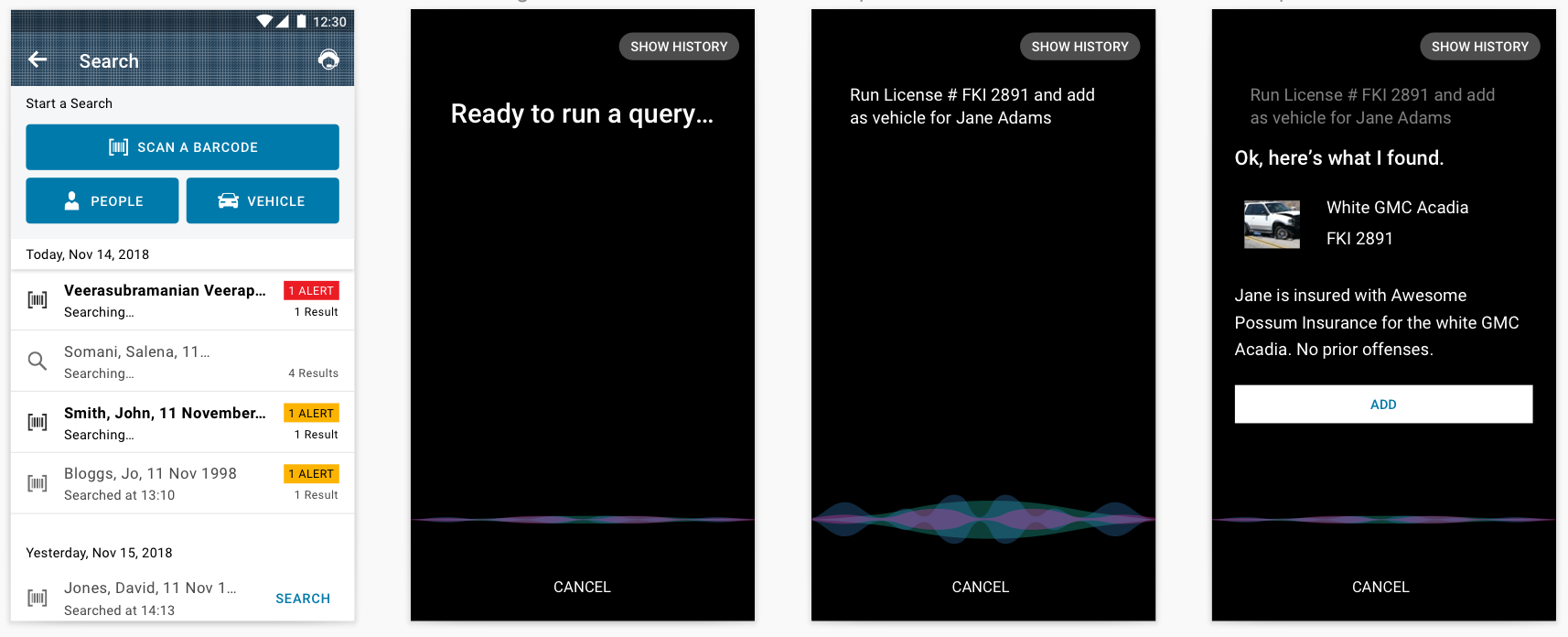
To allow for a hands free, and eyes up experience I explored the concept of using Motorola’s virtual assistant that is available on radios to assistant in running queries on a mobile device. This feature, too, was ruled out of scope for MVP.
Consolidated search results
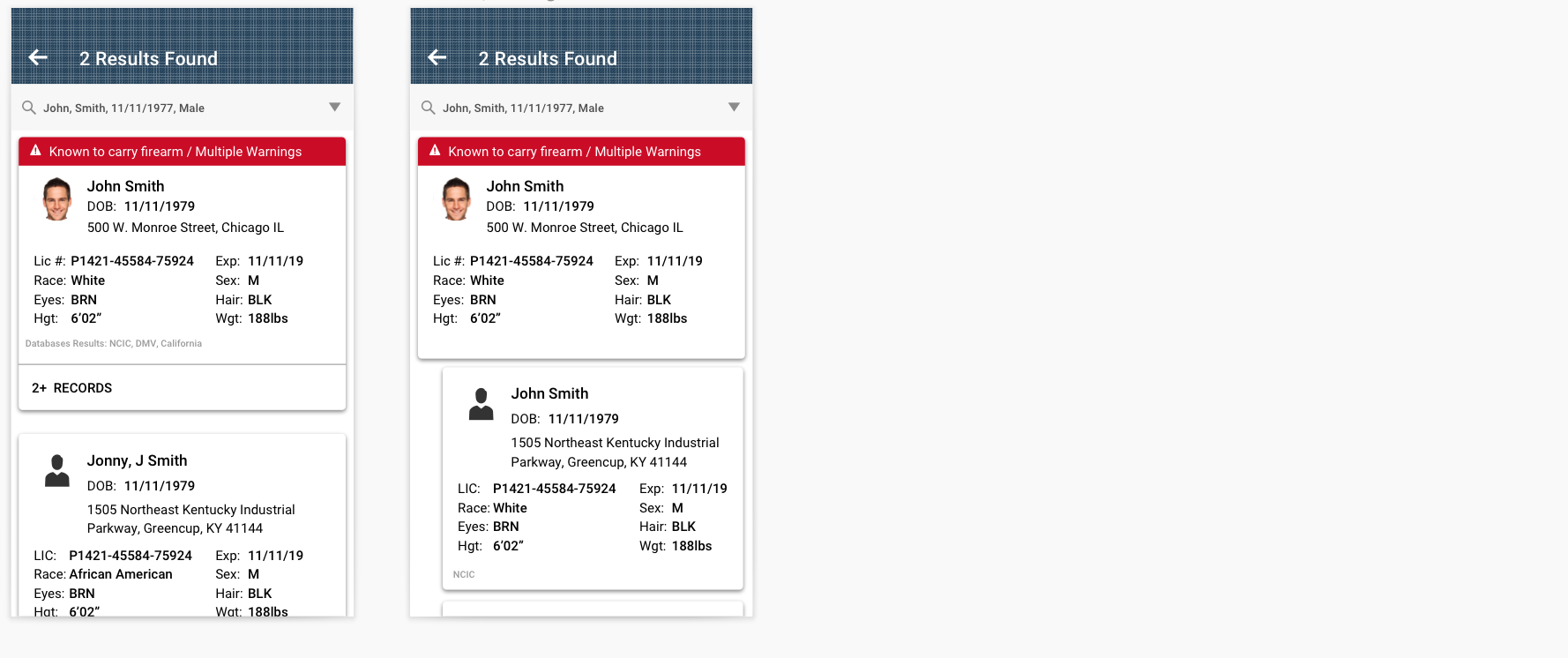
In order to reduce the amount of redundant information from various databases that may appear in search results, I began exploring the concept of consolidating records of each unique entity. When conducting lean ux research sessions, I found that officers prefer to see each result from a given database because the value of information can be dependent on its source.
Findings
Communicate constantly.
During this period at Motorola, within my product team I had to begin implementing structured meeting schedules to ensure design and development had the information needed to effectively deliver each sprint. We faced several blockers during design handoffs when product would add new requirements. By improving our design process and how we work with stakeholders, we were able to mitigate some of these issues.
Because Motorola has traditionally worked in waterfall methodology, product managers needed coaching on how to adjust to agile. I assisted our managers in writing stories that fit the needs of our designers as well as introducing new processes between product, design and development.
User Metrics & Feedback
We found that this application succeeded at reducing the amount of time an officer spends on form filling as well as the amount of time on an incident where they are in potential danger with an individual they are citing.
Several items of feedback surrounded around the dangers of completing the citation outside of their vehicle because they cannot be eyes up, hands free when using a mobile device. This leads us to believe we must continue to design and develop integrations with our virtual assistant, as well as design for larger format in vehicle solutions.
Future Work
The above is a feature set designed and developed for our beta trials. Second release will include incident management related features that began design and development in September 2019. Major focus has been shifted to the strategic design of this application. We have a patent pending on a method of monitoring officer context change and indicating appropriate times when to suggest certain tasks i.e. form completion.